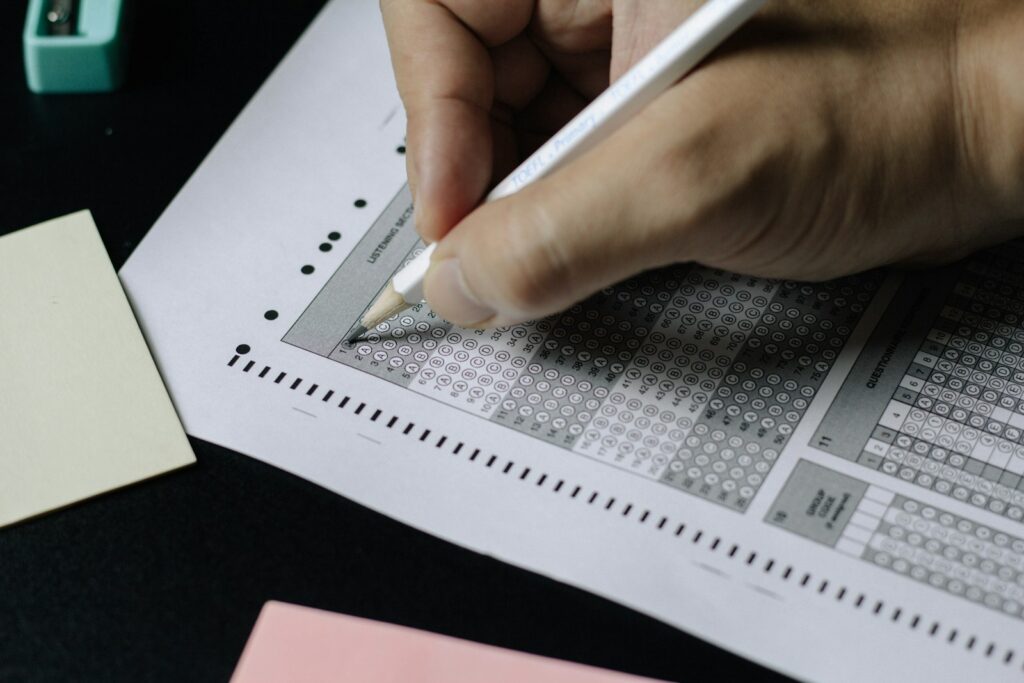
Top 10 Most Likely Questions on Cosmetology State Board Practice Test 3

Cosmetology State Board Practice Test 1


This cosmetology practice test includes 110 multiple-choice questions designed to simulate the real state board licensing exam.

The exam covers key topics including sanitation, hair services, chemical treatments, skin care, and state law.

Use this mock exam to test your knowledge and identify areas that need improvement before taking the official cosmetology licensing exam.

The Cosmetology State Board Exam is your final step toward becoming a licensed beauty professional—combining a written (theory) exam and a hands-on practical assessment to evaluate both knowledge and skills.

Written (Theory) Exam

  • Delivered in a computer-based format, this section typically features around 100 scored multiple-choice questions(plus approximately 10 pretest items that don’t affect your score), with a time limit is 120 minutes, depending on your state.

  • The exam content is generally divided into key domains such as:

    • Scientific Concepts (30–35%) – covering anatomy, chemistry, infection control, sanitation, and product safety.

    • Hair Care & Services (40–45%) – including haircutting, styling, chemical treatments, and client consultation.

    • Skin Care (10–15%) and Nail Care (10–15%) – focusing on skincare basics, makeup, waxing, and nail techniques.

  • A passing score is usually set around 70–75%, though exact requirements may vary by jurisdiction.

Practical (Hands-On) Exam

    • This segment tests real-world salon skills performed on a mannequin or live model under timed, exam-like conditions.

    • Typical services evaluated include haircutting, chemical application, styling, waxing, sanitation procedures, and client preparation.

    • Most states allow up to 2 to 4 hours for this exam, depending on the license type (e.g., cosmetologist vs. esthetician).

Are you preparing for the NIC, PSI, or Pearson VUE Cosmetology Written Exam?

This is a full-length practice test featuring 110 multiple-choice questions that closely replicate the format and timing of the actual State Board exam. You will have 120 minutes to complete the test—mirroring real exam conditions.

Each question provides:

  • The correct answer

  • A detailed expert explanation

  • A memory tip and quick hint to reinforce learning

This practice exam is carefully structured to match the difficulty level, timing pressure, and question style of the official exam. It helps you build the stamina, precision, and confidence needed for success.

Tips for Success:

  • Allocate the full 120 minutes to simulate real test-day pacing.

  • Read each question carefully and be alert to qualifiers like “most,” “least,” and “except.”

  • Review why each incorrect answer is wrong—this deepens understanding and helps you avoid common pitfalls.

  • Treat the test as a true mock exam: eliminate distractions, avoid using notes, and focus fully on the task.

Scroll down to begin your full 110-question Cosmetology State Board practice exam under authentic exam conditions.

110 Questions Cosmetology State Board Exam 1 – with Hint

Begin 110 Questions Cosmetology State Board Exam 1 – with Hint

Welcome to your Cosmetology State Board Licensing Practice Exam (110 Questions + Explanation) - Exam 1

1. 
Which of the following is an important quality of a pleasing personality?
2. 
The high-frequency current often used in beauty salons is known as the Tesla current. What is its more common name?
3. 
For shampooing bleached hair, what is the best method to avoid damage?
4. 
Massage should be gentle and not applied too deeply or for too long. Which of the following describes what massage should NOT be?
5. 
A state of being free from germs is known as aseptic. Boiling water destroys all bacteria except:
6. 
Bleaching the hair before applying toner is necessary to lighten the natural hair color and also to improve:
7. 
If a client has a narrow forehead and a wide jawline (pear-shaped face), how can a stylist create balance?
8. 
What part of the cell contains nutrients that help with growth and repair?
9. 
When should an aniline derivative hair color product first be applied to the darkest areas of hair?
10. 
When using hot wax to remove unwanted hair, how should you test the wax temperature before applying it to the client's skin?
11. 
To measure facial symmetry, the face is divided into four equal parts. If a hairstyle has different lengths or volumes on opposite sides, the design is called:
12. 
A person with a narrow forehead and a wide jawline usually has what facial shape?
13. 
Vaccinations are an example of which type of immunity?
14. 
The pH scale ranges from 0 to 14. Pure water is neutral with a pH of 7. When testing an acidic product, the pH will be between 0 and 6.9. What is the pH range for an alkaline (basic) product?
15. 
To pick up an article on the floor, what muscles are being used?
16. 
For a comfortable and ergonomic sitting posture, where should the soles of your feet be placed?
17. 
In permanent waving, which type of hair requires the use of a mild chemical solution?
18. 
When performing a chemical hair service on overly porous hair, what should a stylist apply first to ensure even processing and prevent further damage?
19. 
Which of the following is not a correct technique when doing sculpture (pin) curling?
20. 
For close-set eyes, where should eyeshadow be applied to create a balanced look?
21. 
Immunity that is inherited is referred to as:
22. 
Which of the following ingredients is not usually found in a good cleansing cream?
23. 
Why should a nail technician cleanse and sanitize a client's natural nails before applying artificial nails?
24. 
Which one of the following is not correct?
25. 
A nonconductor is an insulating material that resists the flow of electric current, such as:
26. 
According to the Board of Cosmetology, who is officially responsible for the salon?
27. 
What is the name of the pus-forming bacteria that grows in bunches or clusters?
28. 
To help prevent hair splits in a finished hairstyle, triangular pin curl bases are used. Which pin curl base is best suited for curly hair that needs little volume or lift?
29. 
When performing hair coloring, which of the following requires a predisposition (patch) test?
30. 
Which face shape is considered the ideal or most balanced?
31. 
Before using thermal tools on a client's hair, what should the technician check to avoid hair breakage?
32. 
An apparatus that changes direct current (DC) to alternating current (AC) is called a converter. What is the name of the device that changes alternating current to direct current?
33. 
Primary colors are blue, yellow, and red. What is the darkest color among the primary colors?
34. 
What is the main purpose of using a half-moon (arc) base when creating pin curls?
35. 
What is the name of the two-step process where the hair is first heavily lightened, and then recolored using a toner?
36. 
If a client has straight, fine, and soft hair, what is the best way to make their hair look thicker and fuller?
37. 
Pathogenic organisms are the types that cause disease. What is the term used for poisoning caused by these organisms?
38. 
Dry and over-bleached hair can be more manageable and softer if shampooed with:
39. 
Which type of electrical current is mainly used for its heat-producing effects in cosmetology?
40. 
Sponges used during the facial cleansing procedure should be kept:
41. 
What color result can you expect when applying a blue-based toner on hair that has been pre-bleached to a yellow level?
42. 
What is the term for cutting hair at a graduated angle, starting from the nape and working up toward the crown?
43. 
The attire worn by a person providing services to a client must always be:
44. 
When performing a facial treatment, why is it important to explain the steps and reasons to the client?
45. 
To sanitize a chamois-covered nail buffer, the chamois should be removed and submerged in:
46. 
To lift an extremely heavy object, use the muscles of the:
47. 
In manicuring, softening the cuticle with cuticle oil is a good treatment for what condition?
48. 
What is the main function of sebum in the skin?
49. 
If a hairstyle design follows the ratio of 3 parts face to 2 parts hair, what does the client want?
50. 
Human cells of the body reproduce by mitosis. Protoplasm is a colorless, jelly-like substance found in:
51. 
When using infra-red rays during a facial treatment, what is the recommended distance between the lamp and the client's skin? The exposure should last around 5 minutes.
52. 
Which face shape would benefit the most from a hairstyle that adds width at the forehead?
53. 
What is the primary purpose of using a toner after facial cleansing?
54. 
To prevent the razor from slipping during use, how should you hold it?
55. 
What is the best product to use when coloring overly porous, damaged hair to help achieve even color results?
56. 
Which of the following is NOT a technique used for thinning hair?
57. 
Massage cream is used to lubricate the skin. The emulsions commonly used in salons are oil-in-water types, which are mixtures made by combining two or more:
58. 
What do we call a substance that allows electricity to pass through it?
59. 
What can happen if you vigorously brush, comb out tangles, and shampoo the hair before or after applying a chemical solution?
60. 
Temporary hair colors do not require a patch (predisposition) test. These products usually contain water, herbs, azo dye, and which of the following?
61. 
Which part of the hair is located below the surface of the skin?
62. 
It will be helpful to a student's success to develop a:
63. 
Hair colors are generally classified into four types based on their chemistry, which affect the final color result and:
64. 
Which muscle is responsible for raising the hair when a person feels cold or scared?
65. 
Which type of electrical current is mainly used for its heat-producing effects in cosmetology?
66. 
Permanent hair dyes are called permanent because the color molecules:
67. 
When repeated color applications make the hair progressively darker, what is this process called?
68. 
"French lacing," "teasing," "matting," and "ratting" are different names for back-combing – a technique used to build volume at the scalp by combing the hair toward the roots. What is another name for ruffing, a technique used to add volume by gently brushing hair from underneath?
69. 
The only true living part of the nail is the:
70. 
The type of pin curl base used mainly at the front or facial line of the forehead is the:
71. 
What is a good topic to talk about with clients in the salon?
72. 
Which one of the following is not considered an antiseptic?
73. 
Freckles are commonly known as lentigines. What is the technical term for chloasma?
74. 
Yellow-orange, red-violet, blue-green, and blue-violet are tertiary colors. Which of the following are the secondary colors?
75. 
When you mix blue, green, and violet together, what color will you get?
76. 
You are about to use a thermal iron on a client's natural fine hair. What heat and pressure setting should you apply?
77. 
What does a cell — the smallest unit of living matter — contain?
78. 
An Ohm measures electrical resistance, and a Watt measures energy used per second. What is the unit called that measures electrical force?
79. 
What is the function of sebum produced by sebaceous glands?
80. 
What does melanin protect the skin from?
81. 
If you lose your cosmetology license, what must you do to get a replacement?
82. 
When performing a thermal hair pressing, special care must be taken at the hairline. Which of the following is the correct method to use?
83. 
Curls should be placed in which direction to support the final hairstyle?
84. 
When is it safe to apply high-frequency current to the hair and scalp?
85. 
When performing a facial on clients with high blood pressure, using high-frequency electrical current may have an opposite effect. What happens to the cellular tissue during high-frequency facial treatment?
86. 
Why should you apply a conditioner filler before using a chemical relaxer?
87. 
What is one of the most common characteristics of hair that has been over-processed by chemical relaxers?
88. 
Which type of bacteria can cause tetanus and botulism and grows in places without oxygen?
89. 
Which service should you avoid when working on a pregnant client?
90. 
What is the ability of the human body to resist and destroy harmful bacteria called?
91. 
Brightening or highlighting shampoos are created by adding hydrogen peroxide and ammonia water to a temporary hair color. They are also used to tone down overly lightened hair and neutralize which unwanted color?
92. 
What is the most important reason for performing a patch test before applying a hair color product?
93. 
Which polish remover should be used on clients wearing nail tips or acrylic nails in the salon?
94. 
A substance that readily transmits an electric current, such as copper wire, is called a good conductor. What do you call a substance that resists the flow of electricity?
95. 
After a towel has been used, where should it be placed?
96. 
Before using an aniline derivative hair color product, why is it necessary to perform a predisposition (patch) test? What indicates a negative (safe) result?
97. 
Proper conduct in relation to your employer and co-workers is called professional:
98. 
What part of the hair structure determines the hair's natural color?
99. 
What is the main ingredient in a water-in-oil emulsion?
100. 
If hair becomes too curly when wet but turns straight when dry, what is most likely the cause?
101. 
Which of the following actions is the most important to prevent cross-contamination during a facial treatment?
102. 
Before giving a facial massage, you should ask if the client has which of the following?
103. 
Where should shampoo manipulation begin during a scalp massage?
104. 
If you want to change the hair color to a much lighter shade, what must be done to the hair first?
105. 
During a facial, when should a skin analysis be performed?
106. 
To make close-set eyes look farther apart, the space between the eyebrows should be equal to the width of:
107. 
Thinning the hair is usually performed at which area?
108. 
When performing electrolysis for permanent hair removal, the needle must be inserted at the same angle as which part of the hair structure?
109. 
What is the name of the main muscle located at the front of the upper arm?
110. 
Human hair is made up of elements like oxygen, sulfur, nitrogen, hydrogen, amino acids, and carbon. Which element makes up the highest percentage in human hair?

FAQ of Top 10 Most Likely Questions on Cosmetology State Board Practice Test 1

Question: What is the best way to prepare for the cosmetology exam?

“answer”: “Taking practice tests regularly is the most effective way to prepare for the written cosmetology exam.”

Answer: Yes. Hair Structure & Growth is one of the most important sections in the written cosmetology exam.

  • 50 Multiple Choice Questions with Hint for learning.

  • Covers Hair Styling, Skin Care, and Nail Technology.

  • Real Exam Format (PSI/NIC)

  • Instant Results and Answer Review with Expert. Explanation

  • Study each topic individually (Hair, Nail, Facial)

  • Review the explanations for each answer

  • Take the test, flash card, technical vocabulary more than once to improve memory

  • Skipping sanitation and safety rules for cosmetology practice.

  • Confusing anatomy terms of cosmetology.

  • Misunderstanding chemical processing steps in cosmetology practice.

Most state exams have 100–120 questions. Our practice test includes 50 key questions to help you prepare. And then, You can try Real Cosmetology Exam.

Most states require at least 70% to pass. Which is 70/100 cosmetology questions.

Hair cutting/styling, skin care, nail services, sanitation, anatomy, and state laws.

Yes. Our test is updated based on the latest PSI/NIC/Pearson Vue standards for current year.

A: They’re designed to be slightly harder so you can be overprepared. The actual exam will feel easier.

Answer: Common mistakes include neglecting sanitation instructions, misreading question stems (especially qualifiers like “most,” “least,” “except”), and poor time management. Cramming without ensuring comprehension and arriving late or underprepared can also hurt performance.

Answer: Typically, the written exam includes around 100 scored multiple-choice questions, with an additional 10 unscored pretest items. The time limit is 120 minutes.

Answer: The minimum passing score varies by state, but most require around 75% to pass the written section.

Answer: Yes—practice materials should follow current exam blueprints (e.g., NIC bulletins) and reflect the latest format, content areas, and language updates to effectively simulate the real exam.

How to Use These Questions for Maximum Exam Success

  • Study Strategy for Tricky Questions

    • Study each expert explanation and trap alert — tricky exam questions are often phrased to confuse you, using distractor options that seem correct at first glance.

    • Practice identifying qualifiers like “most”, “least”, or “except” before answering — many students lose points by missing these small words.

    • Focus on look-alike terms and similar procedures — PSI/NIC loves to test subtle differences in definitions.

You’ll Review

  • Hair anatomy & growth traps – Spot the distractor terms about cortex, cuticle, and hair bulb.

  • Chemical services pitfalls – Avoid confusion between patch tests, porosity tests, and product safety steps.

  • Sanitation & safety gotchas – Master OSHA guidelines without mixing up disinfection vs. sterilization.

  • Common conditions confusion – Differentiate between tinea pedis, trichoptilosis, and similar disorders.

  • Technical skill baits – Recognize the subtle setup differences in over-direction, conditioning, and client comfort checks.

  • Why this matters:
    These tricky questions sharpen your ability to dissect complex wording, avoid common traps, and apply cosmetology theory under pressure. Use the trap alerts and memory tips to boost accuracy and confidence on exam day.

More Cosmetology Practice Tests

Take more free cosmetology practice test to boost your confidence and pass your state board cosmetology exam for cosmetologist license!

Ready for the real challenge? Take the Full 100-Question Cosmetology State Board Practice Test now!

  • Full Cosmetology Exam – 100 Questions
  • Top 20 Difficult Cosmetology Questions
  • How To Pass The Cosmetology Written Exam
  • Cosmetology Practice Test 1 Flash Card – 50 Questions

  • Cosmetology Technical Vocabulary Explanation – 50 Vocabulary
  • Cosmetology Technical Vocabulary – 50 Flash Card 
  • Cosmetology Exam Tips
  • Hair Structure Cosmetology Quiz
  • Hair Growth Cycle Quiz

Leave a Comment

Your email address will not be published. Required fields are marked *

Scroll to Top